Headaches According to Total Biology
- Magic
- August 31, 2026
- 6 min read
- świadomość
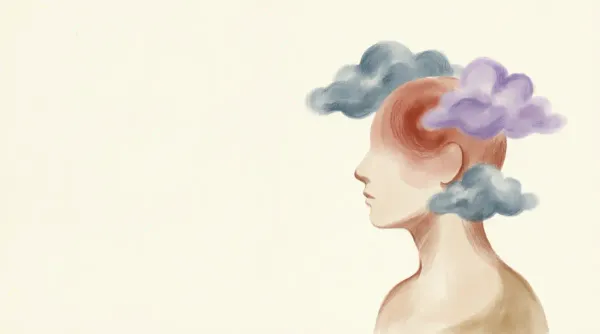
Without weighing in on whether this concept is scientifically confirmed, below is an interpretation of headaches as Total Biology sees them: as a message, not a random malfunction of the body.
The most commonly cited meanings
A drop in one’s own sense of intellectual worth. “I can’t handle this.” “I’m too weak, too stupid.” “Others are better than me.” “I should be doing this better.” The head hurts when the mind keeps judging itself and keeps coming up short in its own eyes.
Pressure to cope. Too many obligations, too much responsibility, a task that has to be met. The questions that surface then are: “Can I handle this?” “Will I manage?”
Perfectionism and excessive ambition. Constantly demanding more of yourself, and the belief that everything has to be done perfectly, with no room for error.
Suppressed anger, suppressed rage. Especially with migraines. Something triggers fury, but that fury finds no outlet on the outside, so it stays inside.
Rage that can’t be spoken. In this interpretation, this applies especially to pain around the temples. It’s anger with no right to a voice.
Worry and tension. With classic tension headaches, this connects to tightness in the neck muscles and the base of the skull. The body literally “stiffens” around whatever the mind is worrying about.
The relationship with the father. In this framework, the head is symbolically tied to the figure of the father. It’s about the feeling “I can never please him,” “I’m not meeting his expectations,” or a grief still bound up with that relationship, even if the father is no longer directly present in the person’s life.
Reluctance to see or hear the truth. With stronger migraines, a recurring theme appears: “I don’t want to see this.” “I don’t want to hear this.” “I don’t want to face reality.” In this interpretation, the pain becomes a way of pushing away something you’re not yet ready to face.
Fear of being noticed or judged. “I don’t want to be seen.” “I’m afraid of being judged.” This is a fear of exposure, of someone looking closely and judging harshly.
A conflict that just ended. This is one of the more distinctive motifs in Total Biology. First comes enormous stress, the thought “I can’t handle this,” then the problem gets resolved and relief arrives, and only then, in that phase of release, does the headache strike. Total Biology calls this the repair phase: the body doesn’t react in the middle of the storm, only once the storm has passed.
Recurring pain and the “track”
With pain that keeps coming back on a regular basis, it’s worth looking for what this framework calls a “track”: a repeating pattern of situations that triggers the same conflict every time. The typical sequence looks like this:
problem → “I can’t handle this” → tension → the problem gets resolved → relief → headache
Then a similar situation comes along and the whole cycle starts again. Recognizing this pattern, the very rhythm in which it repeats, is often the first step toward no longer being caught off guard by the pain each time the tension finally lets go.
Questions that help in finding your own conflict
- What’s happening in my life right before the pain?
- What just ended when the pain appeared?
- What have I recently thought “I can’t handle this” about?
- Who or what do I feel like telling to go to hell, but don’t express it?
- Where do I feel I have to do something perfectly?
- Who am I trying to please, feeling like I’m never good enough?
- What don’t I want to see or hear?
- Has someone recently judged me, humiliated me, or questioned my competence?
Why the moment of pain can be misleading
This last distinction matters a great deal in Total Biology: a headache doesn’t necessarily mean a conflict is active right at the moment the head hurts. According to this theory, it can appear exactly when the tension has already let go and relief has arrived. That’s why looking for the cause only in what’s happening in that particular moment often leads nowhere. The better question isn’t “what’s stressing me right now,” but “what just ended, what did I just face, after which this pain arrived.”
When the answer doesn’t lie in your own life
There’s one thread from the list above that especially often reaches beyond the biography of the person suffering: the relationship with the father. The feeling “I can never please him” or “I’m not meeting his expectations” can be an echo of something much older than one’s own childhood.
Work on inherited family trauma, developed among others by therapists working with family constellations, points to a mechanism that fits well here: an adult who never felt good enough in his own father’s eyes often unconsciously repeats the same pattern toward his own child, even while trying hard to do things differently. The child then grows up with that same sense of never being enough, without ever having known the grandfather’s full story. They inherit the intensity of that fear without knowing where it actually came from.
The same applies to perfectionism and the pressure to cope. Sometimes it isn’t your own standard at all, but a standard someone in the family once had to meet in order to survive, say during a war, poverty, or a serious crisis, and which has since been passed down through the family as something taken for granted, needing no justification.
If the questions in the previous section don’t yield a clear answer in your own life, it’s worth widening the search with a few additional threads:
- Did my father (or grandfather) also never feel good enough in his own father’s eyes?
- Was there someone in the family who had to be perfect in order to survive or earn acceptance?
- Have I ever heard similar words, “I can’t handle this,” “I have to cope,” from someone older in the family, in a completely different context?
- When exactly did this pattern of pressure and never-enough first appear in the family’s history?
Simply distinguishing “this is my own standard” from “this is a standard I took on without knowing it” can already be a relief for the body, even before anything changes in daily life.
Important disclaimer: the text above presents the Total Biology approach and work on inherited family trauma, that is, psychosomatic and therapeutic perspectives, not medically verified. Recurring or severe headaches, especially migraines, can have real neurological causes and require medical consultation, particularly if they change in character, intensify, or come with other concerning symptoms.
Theran
31.08.2026, Andalusia